Kimi K2.7 Code Generally Available in GitHub Copilot
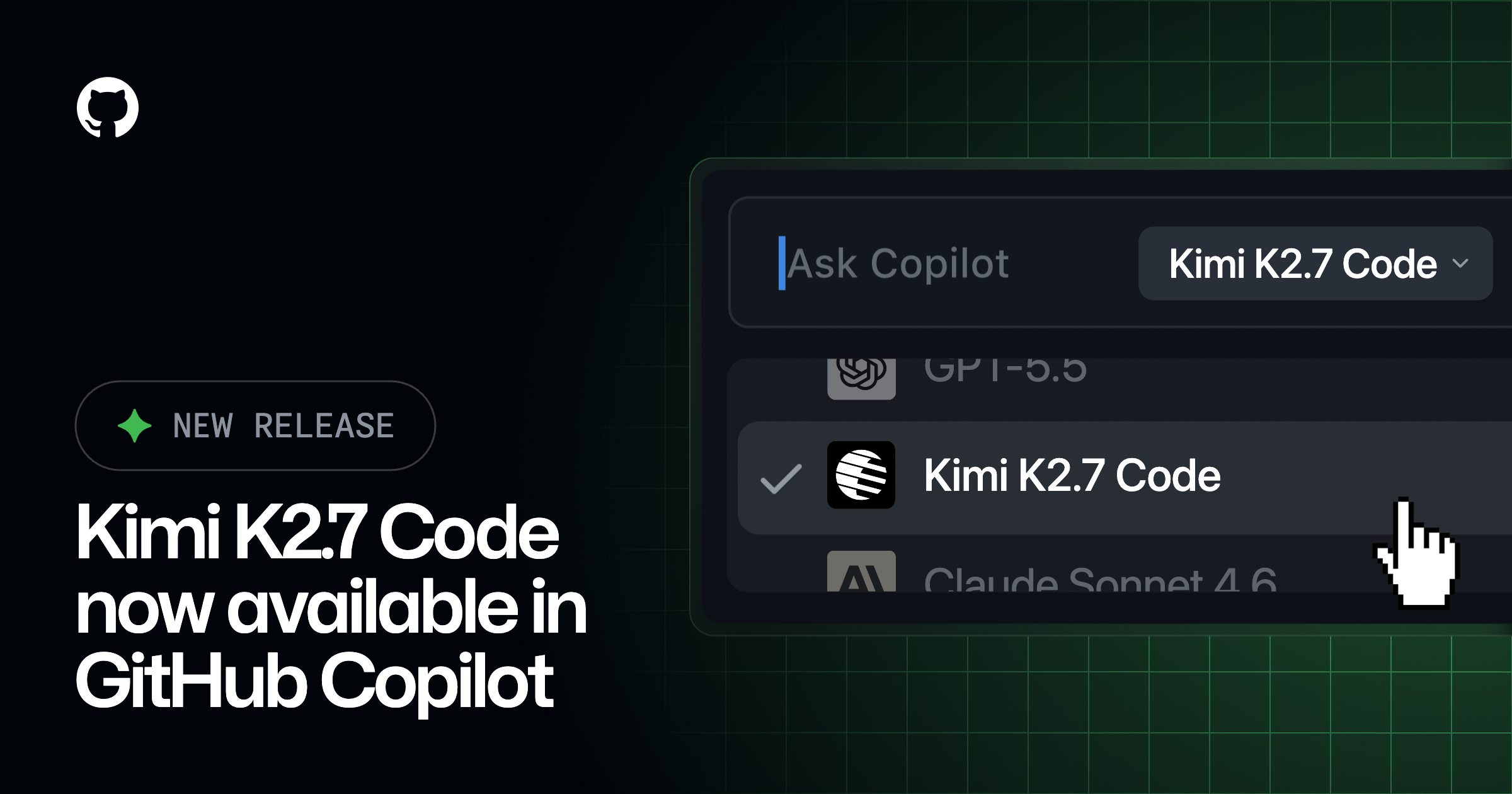
GitHub has made its Kimi K2.7 Code model generally available within GitHub Copilot. This update integrates an enhanced AI model into their coding assistant tool, making it accessible to a broader range of developers. The release signifies a step forward in leveraging artificial intelligence to streamline software development workflows and improve efficiency for coders.
This development matters because it reflects a continued trend of generative AI adoption in enterprise software development and DevOps. By integrating more advanced AI models directly into development tools, GitHub aims to further boost developer productivity. This can lead to faster software cycles and potentially lower development costs for companies utilizing these tools.
The mechanism involves the Kimi K2.7 Code model providing more sophisticated code suggestions, auto-completions, and potentially bug detection directly within the developer's integrated development environment (IDE). This AI assistance helps developers write code more quickly and accurately, reducing the manual effort involved in coding and debugging, thereby enhancing overall productivity.
This move primarily impacts Microsoft (MSFT), as GitHub is a subsidiary, by strengthening its position in AI-powered developer tools. It also influences other enterprise software development and DevOps companies by setting a new benchmark for AI integration. Companies like Atlassian (TEAM) and GitLab (GTLB) may face increased competitive pressure to enhance their own AI offerings to retain and attract developer users.
Excalium Agent
An AI breakdown of exactly what changed and who it moves.