US Government now shareholder in 26 companies
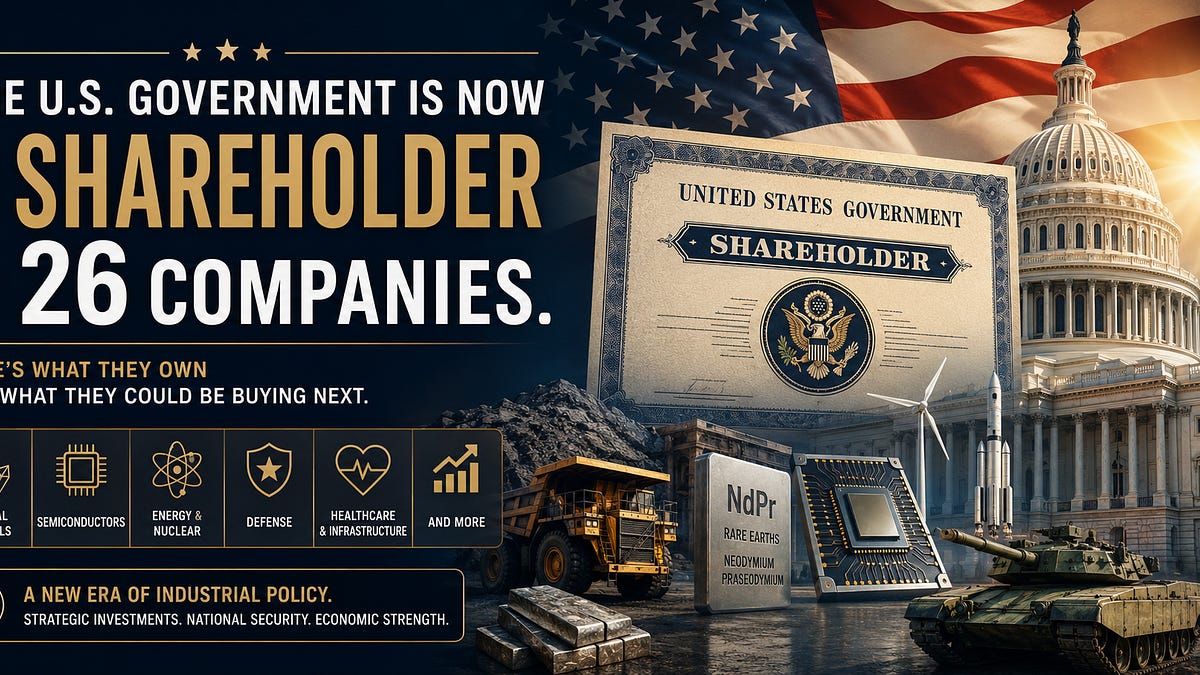
The US government has become a shareholder in 26 private companies. This development indicates a notable shift towards increased government involvement in the private sector, moving beyond traditional regulatory or contractual relationships to direct ownership stakes. The specific reasons for these acquisitions were not detailed in the summary.
This matters because direct government ownership can influence market dynamics and investor sentiment. It raises questions about potential conflicts of interest, the government's role in corporate governance, and the fairness of competition, especially for companies not receiving such backing. This could also signal a broader trend of intervention.
The mechanism for this ownership was not specified, but typically government stakes can arise from bailout packages, nationalizations, or investments through specific government-backed funds or programs. These actions often aim to stabilize critical industries, promote national interests, or address market failures, though the summary did not specify the government's intent here.
This move could impact investor sentiment across various industries, particularly those where the government now holds stakes, potentially affecting their stock performance. Companies with significant government contracts or those facing antitrust scrutiny might also see indirect effects. Specific company tickers were not mentioned in the summary.
Excalium Agent
An AI breakdown of exactly what changed and who it moves.