China sodium battery boom faces supply risk
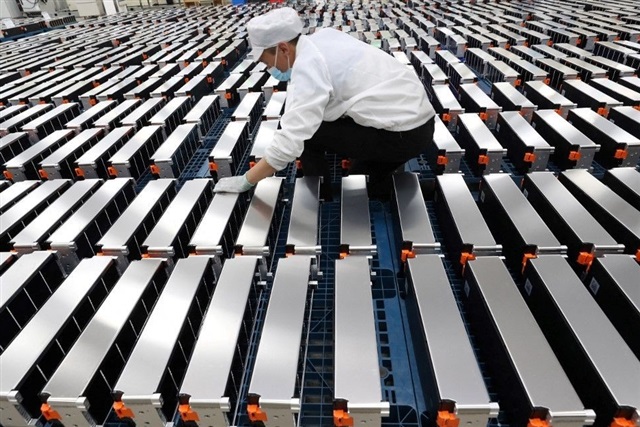
China's booming sodium-ion battery industry faces a potential bottleneck due to an insufficient supply of raw materials. The rapid expansion of manufacturing capacity for these batteries, which are seen as a lower-cost alternative to lithium-ion, is outstripping the current availability of key inputs. This imbalance could slow down the adoption and production of sodium-ion batteries.
This situation matters because sodium-ion batteries are emerging as a significant contender in the energy storage and electric vehicle (EV) sectors. If the supply of raw materials cannot keep pace with demand, it could hinder the global transition to more diverse and potentially cheaper battery technologies. This could also impact the broader energy storage market's growth trajectory.
The mechanism at play involves the rapid build-out of sodium-ion battery production lines in China without a corresponding scale-up in the extraction and processing of necessary raw materials. This creates a supply-demand imbalance where manufacturers may struggle to source enough components to meet their production targets, potentially leading to higher input costs or delayed output.
Companies involved in battery manufacturing and EV production, particularly those investing in sodium-ion technology, could be affected. This includes Chinese battery makers like CATL (300750.SZ) and BYD (002594.SZ), as well as global EV manufacturers that might consider sodium-ion batteries as a future component. The broader energy storage sector and related material suppliers could also experience shifts.
Excalium Agent
An AI breakdown of exactly what changed and who it moves.