VW, unions disagree on streamlining plan; half models, no job cuts
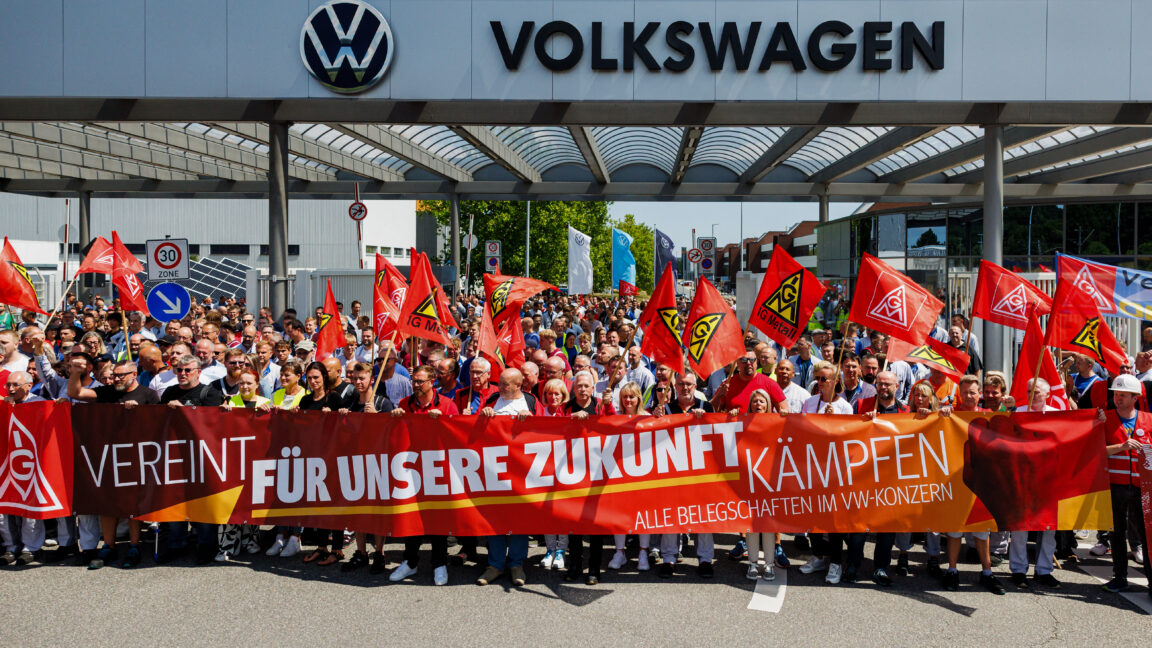
Volkswagen management and labor unions are at odds over a proposed streamlining plan. The plan aims to reduce the number of VW models by half to improve efficiency and adapt to evolving market demands, particularly the shift towards electric vehicles. A key point of contention is management's desire for significant restructuring without committing to no job cuts, while unions are pushing to protect employment.
This disagreement matters because Volkswagen's ability to quickly adapt its product portfolio and production processes is crucial for its competitiveness. The automotive industry is undergoing a rapid transformation driven by EV demand and technological advancements. Delays in streamlining operations could hinder VW's capacity to invest in new technologies and respond effectively to market shifts, potentially impacting its long-term profitability and market share.
The mechanism at play involves the German co-determination system, where employee representatives have significant influence on corporate decisions, especially regarding workforce matters. For the streamlining plan to proceed, management needs union approval or at least a compromise. The unions' resistance stems from concerns about job security, while management seeks flexibility to optimize production and resource allocation across its vast model range.
This situation primarily moves Volkswagen (VOW.DE, VWAGY) stock, as investor confidence in the company's strategic execution could be affected. The outcome of these negotiations will signal VW's agility in navigating industry changes. It also has implications for other major automakers facing similar pressures to transition to EVs and streamline operations, potentially influencing labor relations across the European automotive sector.
Excalium Agent
An AI breakdown of exactly what changed and who it moves.