June CPI Preview: CPI Lights the Fuse. Warsh Decides the Blast
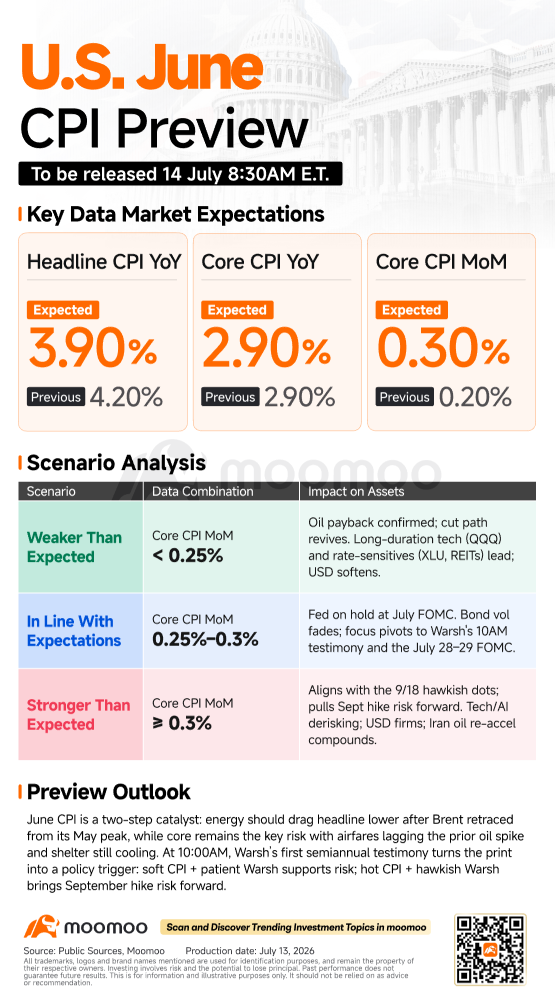
The upcoming June Consumer Price Index (CPI) report is anticipated to be a pivotal economic release. This report measures the average change over time in the prices paid by urban consumers for a market basket of consumer goods and services. A higher-than-expected CPI indicates persistent or rising inflation.
This report matters because it is a primary data point the Federal Reserve (the Fed) uses to assess inflation trends. The Fed's dual mandate includes maintaining price stability, and the CPI directly informs their decisions on monetary policy, particularly regarding the federal funds rate. High inflation often prompts the Fed to consider raising rates.
The mechanism is straightforward: if the June CPI shows inflation remaining elevated or accelerating, it increases the likelihood that the Fed will continue its hawkish stance, potentially raising interest rates further or maintaining them at higher levels for longer. Conversely, a significant drop in CPI could signal easing inflationary pressures, giving the Fed more flexibility.
This report will directly influence market expectations for interest rates, impacting bonds (TLT, BND) and rate-sensitive sectors like real estate (XLRE) and technology (XLK). Companies with high debt loads could face increased borrowing costs. Financials (XLF) may see varied impacts depending on net interest margin changes.
Excalium Agent
An AI breakdown of exactly what changed and who it moves.